

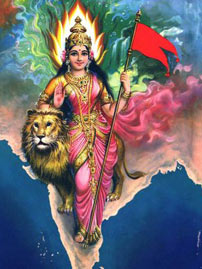
Annually, the people of India, Mā Bhārat, and the Indian diaspora across the world commemorate India’s independence from British rule on August 14 and the adoption of India’s Constitution on January 26. On these sacred days, voices rise together in the singing and chanting of “Vande Mataram,” paying homage to Mā Bhārat — India as Mother.
Originally written in 1875 by Bankim Chandra Chattopadhyay, Vande Mataram served as a pivotal anthem during India’s freedom struggle from colonial rule. Today, the spirit of Vande Mataram may be expanded beyond nationhood — to honour, revere, and protect Mother Earth herself.
“Sujalām suphalām” — rich in waters, rich in fruits. Let’s honour Mother Earth’s life-sustaining abundance: rivers and rains, groundwater and fertile soil, seeds and harvests. Planet Earth is quite literally the source of our survival as She is the provider of all food and water. Earth is our only home, and that nourishment is her most primal act of motherhood.
“Malayaja-śītalam” — cooled by southern breezes. Harmony with nature is what allows life to not merely survive, but to thrive. Earth maintains exquisite balance through winds and seasons, monsoons and migrations — a self-regulating climate system that has sustained life for millennia. When we disturb this balance, suffering follows for all – humanity, animals, plants and Mother Earth Herself.
“Śaśya-śyāmalām” — dark with ripened crops. Earth is not only functional; She is beautiful. From forests to fields, from mountains to oceans, She nurtures not just the body but the mind and the spirit. She is a living aesthetic presence — emotionally sustaining, sensorially rich, sacred to behold and experience.
“Bāhu-koṭi-dhṛta-khara-karāle” — strong-armed, mighty. Mother Earth endures tectonic shifts and tempests, destruction and regeneration. She heals when given time and space. She holds immense power — both creative and destructive. She reminds humanity that reverence, not exploitation, is the posture required in Her presence to thrive and blossom.
By invoking Mā Durga, Mā Lakshmi, and Mā Saraswati, Vande Mataram reveals Earth as our first and greatest teacher. Mother Earth embodies power and courage, abundance and sustenance, wisdom and speech. From Earth we learn science and medicine, agriculture and ecology, sustainability and the profound interdependence of all life.
Vande Mataram is thus a call to environmental ethics — a demand for trusteeship rather than domination, gratitude rather than entitlement. To bow to Mother Earth is to protect Her in our daily actions: to love, respect, and nurture the land, water, and air — thereby safeguarding life itself.
Written in 1875, these words that once echoed the struggle for freedom from imperial oppression, now, resonate with Mother Earth’s struggle for freedom from human oppression. She calls upon us to cease exploitation and honour regenerative agriculture, sustainable development, and the recognition that Earth possesses inherent rights and value beyond human use.
When we call Earth as Mother, exploitation becomes morally unthinkable — just as harming one’s own mother would be. Vande Mataram reminds us that climate crisis is not merely scientific or political; it is a breakdown in relationship — an ethical, cultural, and spiritual rupture born from forgetting our interconnectedness with Earth and all Her beings.
Nature is not inert matter; She is Shakti — living, conscious, and worthy of reverence. Through Durga, Lakshmi, and Saraswati, nature reveals herself as energy, abundance, and wisdom — the very foundations of ecological sustainability.
“Koṭi-koṭi kaṇṭha kalakala nādinī” — resounding in millions of voices. When millions of voices rise in unison, declaring that we will love the Earth as Mother, not resource; honour her beauty, power, and limits; treat environmental care as sacred duty; and live climate action as devotion made visible, we will be protecting Mother Earth as our shared dharma: the responsibility to live within limits, minimize harm, restore balance, and ensure that future generations may flourish and blossom. Earth is our shared Mother, our shared home — and therefore, our shared responsibility. Will you step up and step out to protect Mother Earth?
Today, when we chant out “Vande Mataram,” we make a vow – a promise – to Mother Earth Herself “I will protect you — not just praise you.” What can you do each day to protect Mother Earth? How can you reduce your water consumption? Or reduce the amount of garbage you create? How can you protect Her rivers from poison, Her forests from erasure, and Her air from neglect? Climate action becomes devotion in practice when love for Mother Earth and the country – the city you reside in is expressed through restraint, care, and responsibility—choosing sustainability over excess; and, protection over exploitation. In this way, our daily acts can safeguard the future of the Mother Earth and all who depend on Her. Jai Maa!!